As we enter 2026, global financial markets and economic indicators continue to evolve rapidly. Investors are navigating a landscape shaped by technological innovation, shifting consumer behavior, sustainability imperatives, and geopolitical trends. Whether you’re a seasoned investor or just beginning your wealth-building journey, understanding the top investment trends of 2026 can help you position your portfolio for growth, resilience, and long-term success.
In this guide, we explore the key sectors poised for growth in 2026 and outline the benefits investors can expect by aligning their strategies with these trends.
1. Artificial Intelligence and Automation
Why It Matters
Artificial Intelligence (AI) and automation technologies are no longer future prospects — they are reshaping industries today. From machine learning and robotics to advanced analytics, businesses are adopting AI to drive efficiency, reduce costs, and unlock new revenue streams.
Investment Benefits
- High Growth Potential: AI adoption across healthcare, finance, logistics, and consumer services fuels demand for AI-related products and services.
- Diversification: Investment opportunities span hardware, software, and services — offering exposure to different segments of the technology value chain.
- Competitive Edge: Companies leading in AI innovation often outperform peers in productivity and profitability.
How to Capitalize
Investors can consider:
- AI-focused ETFs and mutual funds
- Stocks of companies heavily investing in AI infrastructure
- Startups and private equity ventures specializing in AI solutions
2. Renewable Energy and Sustainable Technologies
Why It Matters
Global efforts to combat climate change have accelerated investments in clean energy and sustainable technologies. Governments and corporations are committing to net-zero targets, creating fertile ground for renewable energy growth.
Investment Benefits
- Long-Term Demand: Clean energy sources such as solar, wind, and green hydrogen are central to future energy grids.
- Policy Support: Incentives, subsidies, and environmental regulations propel investment flows into renewables.
- Risk Mitigation: Sustainable investments can reduce exposure to sectors vulnerable to climate regulation risks.
How to Capitalize
Options include:
- Renewable energy stocks and ETFs
- Green bonds and impact investing funds
- Private placements in sustainability startups
3. Real Estate in Secondary Markets
Why It Matters
While major metropolitan areas remain strong, secondary cities are emerging as attractive real estate investment opportunities due to affordability, population growth, and remote work trends.
Investment Benefits
- Higher Yield Potential: Secondary markets often offer better rental yields compared to saturated primary markets.
- Capital Appreciation: Increased migration to affordable locations fuels demand for residential and commercial properties.
- Diversification: Real estate adds stability and inflation protection to portfolios.
How to Capitalize
Investors can explore:
- REITs focused on emerging markets
- Direct investments in properties
- Real estate crowdfunding platforms
4. Healthcare Innovation and Biotech
Why It Matters
The healthcare sector continues to transform through breakthrough treatments, personalized medicine, telehealth, and cutting-edge biotechnology.
Investment Benefits
- Aging Population: Demographic trends support sustained demand for healthcare products and services.
- Tech-Driven Advances: Gene editing, immunotherapies, and digital health platforms are creating new revenue streams.
- Resilience: Healthcare often performs well even during economic downturns
How to Capitalize
Consider investments like:
- Biotech ETFs
- Stocks of innovative medical companies
- Venture funds in health tech and life sciences
5. Financial Technology (FinTech)
Why It Matters
FinTech innovation continues to disrupt traditional financial services with solutions such as digital payments, blockchain, decentralized finance (DeFi), and embedded finance systems.
Investment Benefits
- Rapid Adoption: Consumers and businesses increasingly prefer digital financial solutions.
- Fee and Data Monetization: FinTech companies benefit from recurring revenue and data-driven insights.
- Global Market Reach: Digital financial services easily cross borders, expanding user bases globally.
How to Capitalize
Investment paths include:
- FinTech stocks and ETFs
- Blockchain and payment infrastructure providers
- Equity in FinTech startups
6. Emerging Markets Equity Growth
Why It Matters
Emerging markets (EM) offer dynamic growth driven by favorable demographics, urbanization, and rising middle classes.
Investment Benefits
- Growth Exposure: EM equities often outperform developed markets over long horizons.
- Diversification: Expands portfolio beyond traditional markets.
- Sector Expansion: Technology, financial services, and consumer goods lead the charge
How to Capitalize
Investors might consider:
- EM index funds and ETFs
- Country-specific equity funds
- Active management strategies for niche markets
7. Cybersecurity Solutions
Why It Matters
With rising digital transformation comes increasing cybersecurity threats. From data breaches to ransomware attacks, businesses are investing heavily in cybersecurity infrastructure.
Investment Benefits
- Recurring Revenue: Security subscriptions and services create predictable income streams.
- Universal Demand: Every industry needs cybersecurity protection.
- Innovation-Led Growth: AI-enabled security platforms continue to evolve rapidly.
How to Capitalize
Investment strategies include:
- Stocks of leading cybersecurity firms
- Cybersecurity ETFs
- Venture capital in new security startups
8. Consumer Experience and E-Commerce Evolution
Why It Matters
The shift toward digital commerce and enhanced consumer experiences persists. From personalized online shopping to smart retail technologies, consumer behavior continues to define growth trends.
Investment Benefits
- Scalability: Digital platforms scale rapidly with lower physical overhead.
- Data Monetization: Consumer analytics power better targeting and higher conversion rates.
- Subscription Models: E-commerce innovations increasingly include subscription-driven revenue.
How to Capitalize
Investors can choose:
- E-commerce related ETFs
- Stocks of customer-centric digital platforms
- Logistics and fulfillment technology providers
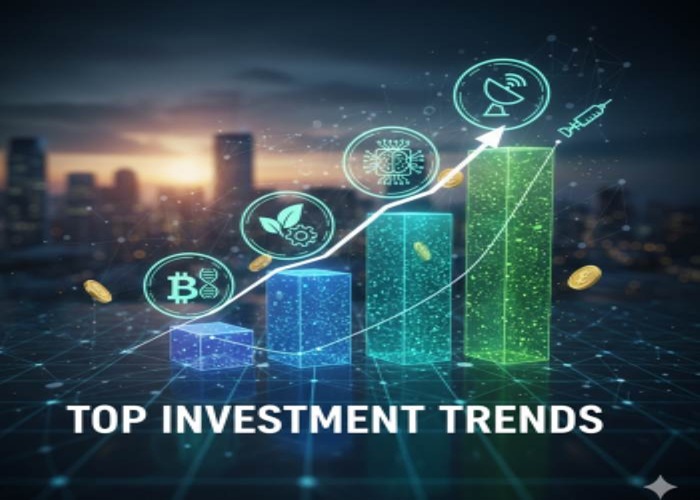
Why 2026 Is a Defining Year for Investors (Top Investment Trends)
Across these trends, several investment themes emerge that are particularly relevant for investors in 2026:
1. Technological Disruption Is Accelerating – Emerging technologies aren’t just reshaping single markets — they are redefining global economic frameworks. Investors who identify key players early can achieve superior returns.
2. Sustainability Is Mainstream – Environmental, social, and governance (ESG) factors are influencing capital flows. Sustainable investments are no longer niche — they’re becoming fiduciary responsibilities. 3. Globalization Takes on New Forms – Emerging markets and global digital platforms are opening new frontiers for investment growth. Connected economies offer enhanced diversification benefits.
4. Inflation and Interest Rate Dynamics Matter – With inflation and rate shifts influencing asset valuations, investors need diversified portfolios that can withstand macroeconomic adjustments.
Investor Tips for Navigating 2026 (Top Investment Trends)
To capitalize on these trends effectively, consider the following investor best practices:
Diversify Across Asset Classes – Combining equities, bonds, real estate, and alternative investments helps manage risk and capture growth across different market cycles.
Focus on Long-Term Fundamentals – Short-term volatility is inevitable, but long-term performance is driven by underlying business and economic growth.
Leverage Technology for Smarter Decisions – Advanced analytics, AI-powered platforms, and data research tools can enhance investment decision making and timing.
Stay Updated with Regulatory and Policy Shifts – Government policies, tax incentives, and sustainability regulations can directly impact investment performance — especially in renewable energy and healthcare.
Conclusion
2026 promises to be an exciting year for investors willing to adapt and capitalize on transformative trends. From AI innovation and sustainable energy breakthroughs to emerging market growth and digital finance, the investment landscape is rich with opportunity. By focusing on long-term fundamentals, diversifying strategically, and aligning with market-leading sectors, investors can position themselves to achieve meaningful returns in the years ahead.
Start exploring these trends today — because the best investment opportunities are often the ones you act on early.
Disclaimer:
The information provided in this blog post is for general informational purposes only and does not constitute legal, financial, or investment advice. Le Nest Properties and its website do not assume any responsibility or liability for decisions made based on this content. If you are considering investing in Dubai real estate, we strongly recommend consulting with a qualified specialist or contacting us directly for personalized guidance.