Introduction
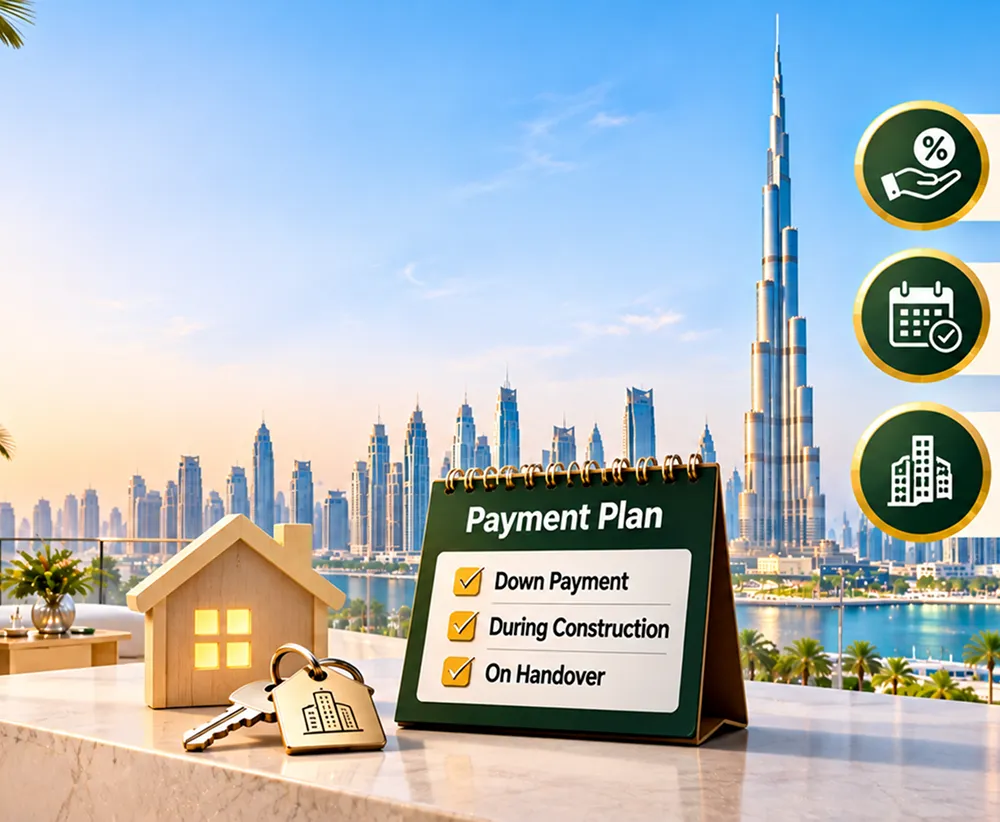
Dubai’s off-plan property market offers flexible payment plans that allow buyers and investors to spread payments across different construction stages instead of paying the full amount upfront. From affordable apartments to luxury villas, these installment options make property ownership more accessible. However, understanding payment schedules, additional fees, and potential risks is essential for making informed investment decisions in 2026 and beyond.
What Is an Off-Plan Property Payment Plan in Dubai?
An off-plan payment plan is a structured installment arrangement offered by a property developer for a residential unit that is under construction or has not yet been completed. Unlike ready properties, which typically require full settlement at the time of transfer, off-plan properties allow buyers to make payments over an agreed period.
Key Points About Off-Plan Payment Plans in Dubai
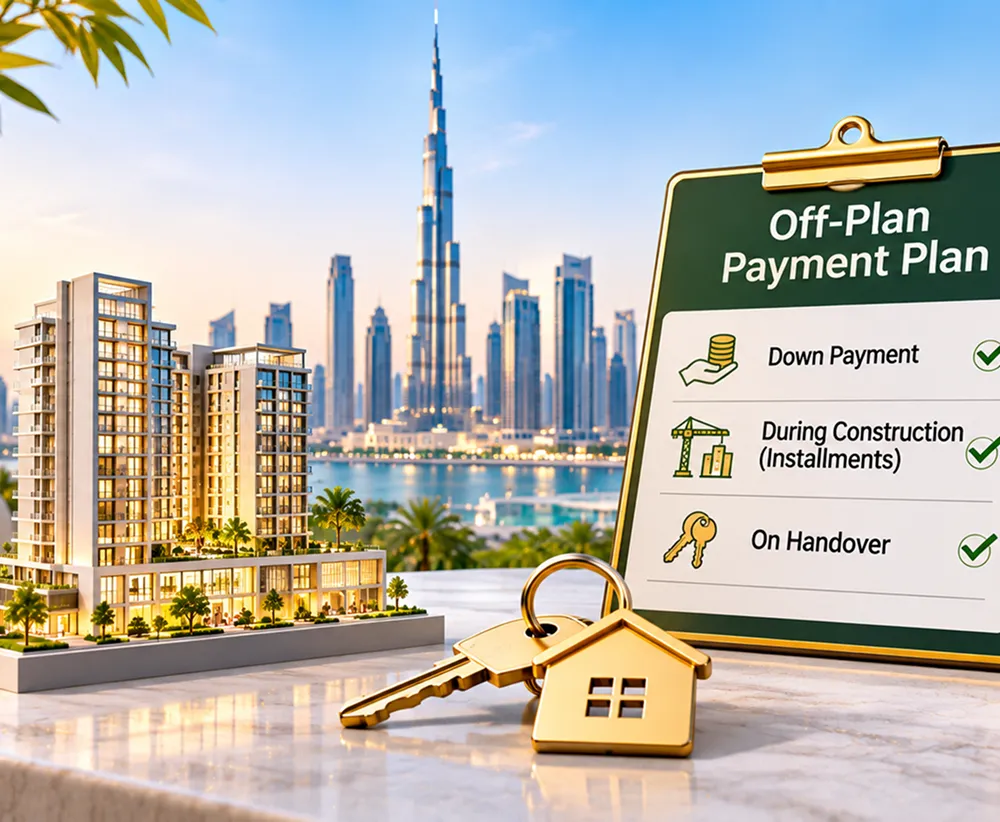
- Flexible Installments: Buyers can pay for a property in stages instead of paying the full amount upfront.
- Initial Booking Payment: A down payment is required to secure the property.
- Construction-Based Payments: Installments are scheduled throughout the construction period.
- Final Handover Payment: The remaining balance is typically paid upon property completion.
- Post-Handover Options: Some developers allow buyers to continue making payments after receiving the property.
- Example – 70/30 Payment Plan: For an AED 1,500,000 property, buyers pay AED 1,050,000 before handover and AED 450,000 upon completion.
- Financial Flexibility: Structured payment plans help buyers manage their budgets while securing a property before completion.
This approach can help buyers manage their finances while securing a property ahead of completion.
Most Common Off-Plan Payment Plans in Dubai
Dubai developers offer several payment structures depending on the project, construction timeline, and promotional terms.
1. 60/40 Payment Plan – Balanced Installments
A 60/40 payment plan typically requires buyers to pay 60% of the property value before completion and the remaining 40% upon handover.
For a property valued at AED 1,500,000:
- 60% during the booking and construction stages: AED 900,000
- 40% at handover: AED 600,000
This arrangement can appeal to buyers who prefer spreading their payments across the construction period while retaining a substantial balance until completion.
2. 70/30 Payment Plan – Popular Construction-Based Structure
Under a 70/30 payment plan, buyers pay 70% of the purchase price before handover and settle the remaining 30% when the property is ready.
For an AED 1,500,000 property:
- 70% before handover: AED 1,050,000
- 30% upon handover: AED 450,000
This structure may suit investors with sufficient savings or predictable income who want a smaller final payment.
3. 80/20 Payment Plan – Lower Handover Balance
An 80/20 payment plan requires 80% of the purchase price before completion and 20% upon handover.
For an AED 1,500,000 apartment:
- 80% before handover: AED 1,200,000
- 20% at handover: AED 300,000
Buyers choosing this option should ensure they can comfortably meet the larger installments during construction.
4. Post-Handover Payment Plans – Extended Payment Flexibility
Some developers offer post-handover payment plans that allow buyers to continue paying installments after receiving their completed property.
For example, a developer might offer a 50/50 structure in which 50% is paid before handover and the remaining 50% is spread over an agreed period after completion.
These arrangements may help buyers manage cash flow, particularly if they intend to occupy or rent out the property.
However, post-handover plans are not available for every development, and buyers should review the contract for additional costs, restrictions, and payment obligations.
5. 50/50 Payment Plan – Half Now, Half Later
A 50/50 payment plan divides the property price into two portions. Typically, buyers pay 50% through booking and construction installments, followed by the remaining 50% at handover.
This structure can reduce payments during construction, although buyers must prepare for a larger final settlement.
How Does the Off-Plan Property Payment Process Work?
Purchasing an off-plan property in Dubai generally involves several important stages.
Step 1: Choose a Property and Developer
Research available developments, compare locations, and review the developer’s reputation, previous projects, and expected handover dates.
Step 2: Pay the Booking Amount
Once a suitable property is selected, buyers usually pay an initial booking amount. The percentage varies by developer and project.
Step 3: Sign the Sale and Purchase Agreement
The Sale and Purchase Agreement (SPA) outlines the property details, agreed purchase price, installment schedule, completion terms, and contractual responsibilities.
Step 4: Register the Property with Dubai Land Department
Off-plan transactions are registered through the Oqood system, which records the initial sale before the final title deed is issued.
Step 5: Make Scheduled Installments
Buyers continue making payments according to the agreed schedule, which may be based on fixed dates, construction milestones, or both.
Step 6: Complete the Handover Process
Once the development is completed and the contractual requirements are satisfied, buyers settle applicable outstanding payments and proceed with inspection and handover.
Understanding Additional Costs When Buying Off-Plan Property
Although flexible payment plans reduce the need for immediate full payment, buyers should budget for expenses beyond the advertised property price.
Common costs include:
- Dubai Land Department registration fee: Generally, 4% of the purchase price, subject to the applicable transaction rules and any developer incentives.
- Administrative and registration charges: Additional fees may apply depending on the transaction.
- Mortgage-related expenses: Applicable when financing is used.
- Service charges: Ongoing property maintenance and community expenses after handover.
- Handover expenses: Any applicable utility connection fees and other contractual charges.
For example, the standard 4% DLD fee on an AED 1,500,000 property equals AED 60,000.
Buyers should request a complete payment breakdown before signing an agreement.
Are Off-Plan Payment Plans Safe in Dubai?
Dubai has strict regulations to help protect buyers investing in off-plan properties. Developers are required to use project-specific escrow accounts, helping ensure that buyers’ payments are used for the intended development.
The Dubai Land Department (DLD) also allows buyers to verify registered projects and check construction progress.
However, risks such as construction delays, market changes, and unexpected costs may still occur. Before purchasing, buyers should check the developer’s reputation, project registration, escrow account details, and payment terms to make a safer and more informed investment decision.
Benefits of Flexible Off-Plan Payment Plans
Flexible installment arrangements offer several potential advantages for buyers and investors.
Improved Financial Planning. Instead of making one substantial payment, buyers can organize their finances around scheduled installments.
Access to New Developments. Off-plan purchases provide opportunities to secure properties in newly launched residential communities.
Potential Capital Appreciation. A property’s market value may increase during construction, although appreciation is never guaranteed.
More Property Choices. Early buyers may have access to a wider selection of layouts, floors, views, and unit configurations.
Long-Term Investment Opportunities. Investors can plan for future rental income or resale after completion, subject to market conditions and applicable restrictions.
Important Risks to Consider Before Choosing a Payment Plan
Flexible payment plans do not always guarantee affordability or profitability. Buyers should assess their financial capacity, prepare for scheduled installments, and consider risks such as construction delays and unexpected expenses. Mortgage approval is not guaranteed, so reviewing the Sale and Purchase Agreement (SPA), understanding payment penalties, and maintaining sufficient savings are essential for a secure investment.
Which Dubai Off-Plan Payment Plan Is Best for You?
The ideal payment plan depends on your financial situation and property investment objectives. First-time buyers may prefer arrangements that spread installments more evenly, while investors with greater available capital might choose plans requiring larger payments during construction.
Important Points When Choosing an Off-Plan Payment Plan in Dubai
- Financial Capacity: Choose a payment plan that matches your budget and financial situation.
- Flexible Installments: First-time buyers may prefer smaller, evenly distributed payments.
- Available Capital: Investors with higher budgets may consider larger installments during construction.
- Mortgage Eligibility: Confirm financing options and bank approval before committing.
- Property Price and Location: Compare the total purchase price and location to ensure good investment value.
- Construction Timeline: Check the expected completion and handover dates.
- Rental Income Potential: Consider rental demand and potential returns on investment.
- Long-Term Investment Value: Evaluate future property appreciation and resale opportunities.
- Financial Stability: Select a manageable payment plan that avoids unnecessary financial pressure.
Final Thoughts
Dubai’s off-plan property payment plans provide buyers with opportunities to enter the real estate market through structured installments rather than immediate full payment.
Whether considering a 60/40, 70/30, 80/20, or post-handover arrangement, understanding the payment schedule and associated obligations is essential for making an informed decision.
The right choice should balance affordability, developer reliability, property location, and long-term investment goals.
NOTE: The installment structures and AED examples are illustrative, not confirmed offers from specific developers. Actual payment schedules, fees, and contract conditions vary by project. Regulatory information was checked against Dubai Land Department guidance.
Disclaimer:
The information provided in this blog post is for general informational purposes only and does not constitute legal, financial, or investment advice. Le Nest Properties and its website do not assume any responsibility or liability for decisions made based on this content. If you are considering investing in Dubai real estate, we strongly recommend consulting with a qualified specialist or contacting us directly for personalized guidance.