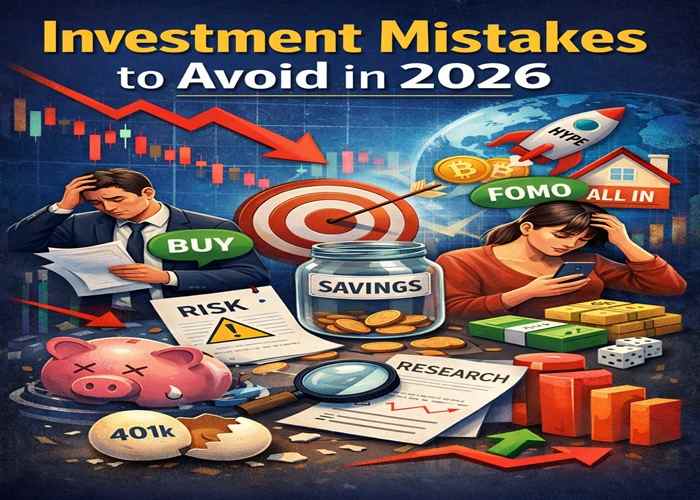
Investing is one of the most powerful ways to build wealth, achieve financial freedom, and secure your future. However, many investors—especially beginners—lose money not because the market failed them but because they made avoidable mistakes.
As global markets evolve in 2026 with advancements in technology, changing economic policies, and emerging industries, investors must approach their strategies carefully. Understanding the most common investment mistakes and how to avoid them can significantly improve long-term financial success. This guide explores the most common investment mistakes to avoid in 2026, along with expert tips to help investors make smarter decisions and maximize their financial returns.
Why Avoiding Investment Mistakes Is Crucial for Investors
Every investment carries some level of risk. However, the difference between successful investors and unsuccessful ones often lies in how they manage risk and avoid common pitfalls.
Avoiding investment mistakes offers several advantages:
- Protects your capital
- Improves long-term returns
- Reduces emotional decision-making
- Strengthens portfolio stability
- Builds sustainable wealth over time
Investors who adopt disciplined strategies and stay informed about market trends are far more likely to achieve consistent financial growth.
1. Investing Without Clear Financial Goals
One of the most common mistakes investors make is entering the market without clearly defined financial goals.
Some investors want to build long-term wealth, while others aim for short-term profits, retirement savings, or passive income streams.
Without clear objectives, investors often struggle to create an effective strategy.
Problems Caused by Lack of Goals
- Poor asset selection
- Inconsistent investment decisions
- Taking unnecessary risks
- Selling investments too early
Expert Tip
Define clear financial goals before investing. For example:
- Short-term goals: 1–3 years
- Medium-term goals: 3–7 years
- Long-term goals: 10+ years
A goal-based strategy helps investors choose the right assets and maintain discipline during market fluctuations.
2. Lack of Proper Research
Many investors rely on market rumors, social media tips, or trending investment opportunities without conducting proper research.
This behavior often leads to poor investment choices and financial losses.
Why Research Matters
Thorough research allows investors to evaluate:
- Market demand
- Industry growth potential
- Company financial performance
- Risk factors
- Competitive advantages
Expert Tip
Always perform due diligence before investing. Read financial reports, analyze historical performance, and study market trends before committing your money.
Well-informed investors make more confident and profitable decisions.
3. Emotional Investing
Emotions can significantly influence investment decisions. Fear, greed, and impatience often lead investors to make costly mistakes.
For example:
- Panic selling during market downturns
- Buying assets during market hype
- Selling profitable investments too early
Why Emotional Investing Is Risky
Financial markets naturally fluctuate. Investors who react emotionally often buy when prices are high and sell when prices drop.
Expert Tip
Develop a long-term investment strategy and stick to it regardless of short-term market volatility.
Successful investors focus on fundamentals and long-term growth instead of reacting to daily market movements.
4. Poor Portfolio Diversification
Investing all your money in a single asset or industry is extremely risky.
Diversification is one of the most effective strategies to protect your investments.
Examples of Diversified Assets
- Stocks
- Real estate
- bonds
- ETFs
- commodities
- alternative investments
Benefits of Diversification for Investors
- Reduces overall portfolio risk
- Protects against market volatility
- Improves long-term stability
- Increases chances of consistent returns
Expert Tip
Build a balanced portfolio that includes multiple asset classes and industries.
Diversification ensures that if one investment performs poorly, others may offset the loss.
5. Ignoring Risk Management
Many investors focus only on potential profits while ignoring risk management strategies.
Every investment involves some level of risk, and failing to manage it can lead to significant losses.
Effective Risk Management Strategies
- Setting stop-loss limits
- Diversifying investments
- Avoiding excessive leverage
- Allocating capital wisely
Expert Tip
Never invest money you cannot afford to lose. Risk management is essential for protecting your capital and maintaining financial stability.
6. Overtrading
Overtrading occurs when investors buy and sell assets too frequently in an attempt to generate quick profits.
This strategy often backfires due to:
- Transaction fees
- taxes
- poor timing decisions
- emotional trading
Why Long-Term Investing Is Better
Historically, long-term investors tend to outperform frequent traders.
Expert Tip
Focus on long-term growth rather than short-term gains. Patience is often one of the most valuable traits of successful investors.

7. Following Market Hype
Many investors follow popular trends or viral investment ideas without understanding the underlying value.
This herd mentality often leads to market bubbles and sudden losses.
Example Situations
- Investing in trending stocks without research
- Buying assets solely because others are doing it
- FOMO (fear of missing out) investing
Expert Tip
Focus on investment fundamentals rather than market hype. Evaluate the true value and long-term potential of an asset before investing.
8. Ignoring Economic Trends
Global economic trends play a major role in shaping investment opportunities.
Investors who fail to monitor these trends may miss valuable opportunities or face unexpected risks.
Important Trends to Watch in 2026
- Interest rate changes
- inflation levels
- technological innovation
- global economic policies
- energy and sustainability trends
Expert Tip
Stay informed about global economic developments and adjust your investment strategy accordingly.
9. Lack of Long-Term Perspective
Many investors aim for quick profits and ignore the benefits of long-term investing.
Short-term trading can be unpredictable and risky.
Benefits of Long-Term Investing
- Compounding returns
- Reduced trading costs
- Greater portfolio growth
- Stronger resilience during market downturns
Expert Tip
Invest consistently and allow your investments time to grow. Long-term strategies often produce the most reliable financial results.
10. Not Reviewing Your Investment Portfolio
Some investors make investments and forget about them completely.
However, markets constantly change, and portfolio performance should be monitored regularly.
Why Portfolio Review Is Important
Regular reviews help investors:
- Rebalance asset allocation
- Identify underperforming investments
- Take advantage of new opportunities
Expert Tip
Review your investment portfolio at least once or twice a year to ensure it still aligns with your financial goals.
Key Benefits for Investors Who Avoid These Mistakes
Investors who understand and avoid common mistakes enjoy several long-term benefits.
Higher Returns – Smart investment strategies often lead to stronger and more consistent profits.
Better Risk Control – Avoiding common pitfalls helps investors protect their capital during market volatility.
Improved Financial Discipline – Investors who follow structured strategies make more rational decisions.
Sustainable Wealth Growth – Long-term planning helps build wealth steadily over time.
Greater Financial Confidence – Knowledge and preparation empower investors to make informed financial decisions.
Final Thoughts
Investing in 2026 presents numerous opportunities across industries such as technology, real estate, renewable energy, and global financial markets. However, success in investing requires careful planning, discipline, and continuous learning.
By avoiding common investment mistakes—such as emotional trading, lack of research, poor diversification, and short-term thinking—investors can significantly improve their chances of long-term success.
Smart investors focus on strategy, risk management, and long-term growth rather than quick profits. With the right approach, investing can become a powerful tool for building financial security and achieving long-term wealth.
Disclaimer:
The information provided in this blog post is for general informational purposes only and does not constitute legal, financial, or investment advice. Le Nest Properties and its website do not assume any responsibility or liability for decisions made based on this content. If you are considering investing in Dubai real estate, we strongly recommend consulting with a qualified specialist or contacting us directly for personalized guidance.