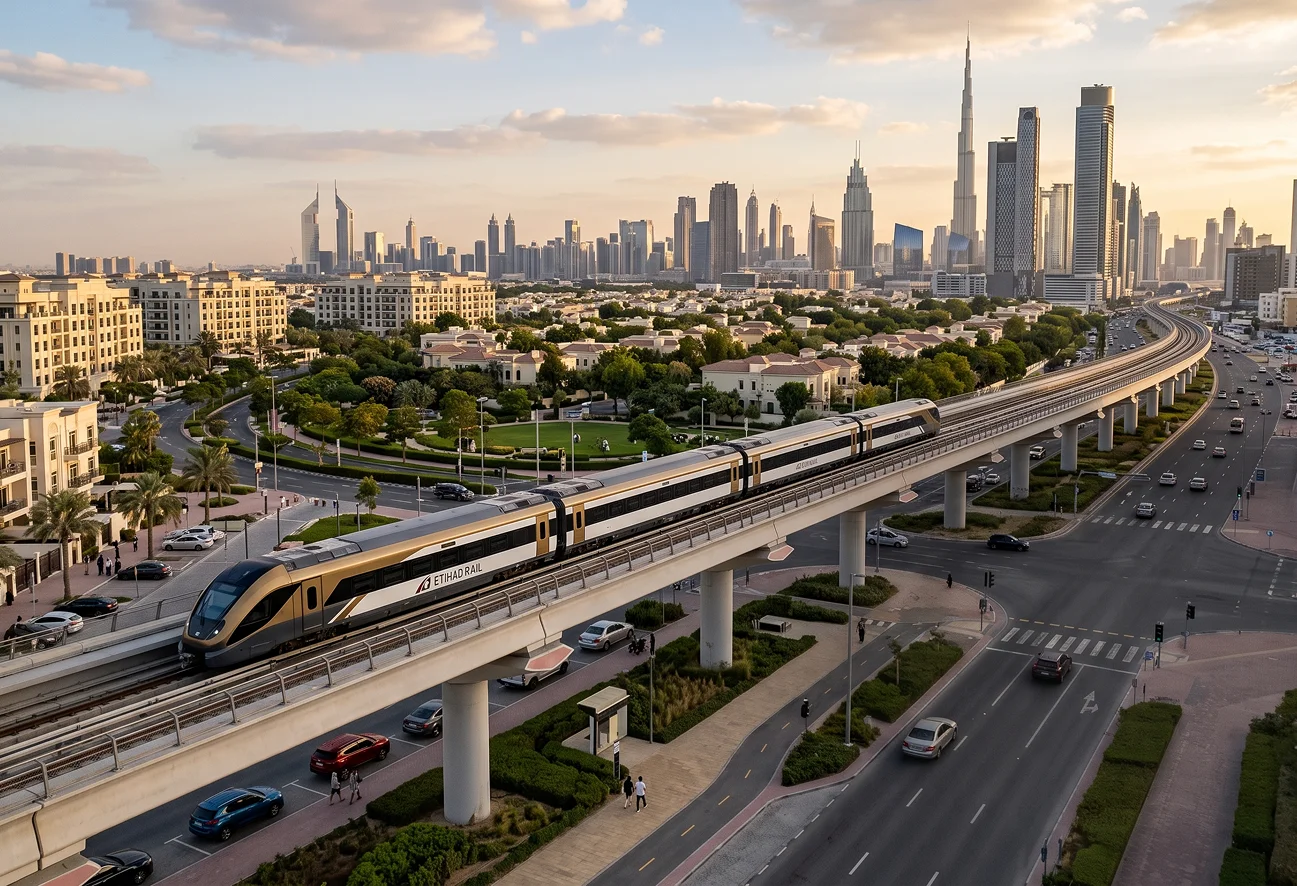
For decades, the standard playbook for UAE real estate was simple: buy near the coast, pick a shiny tower, and hold on tight. But a massive piece of infrastructure is completely shifting the country’s geography and smartest investors are taking notice.
Enter Etihad Rail.
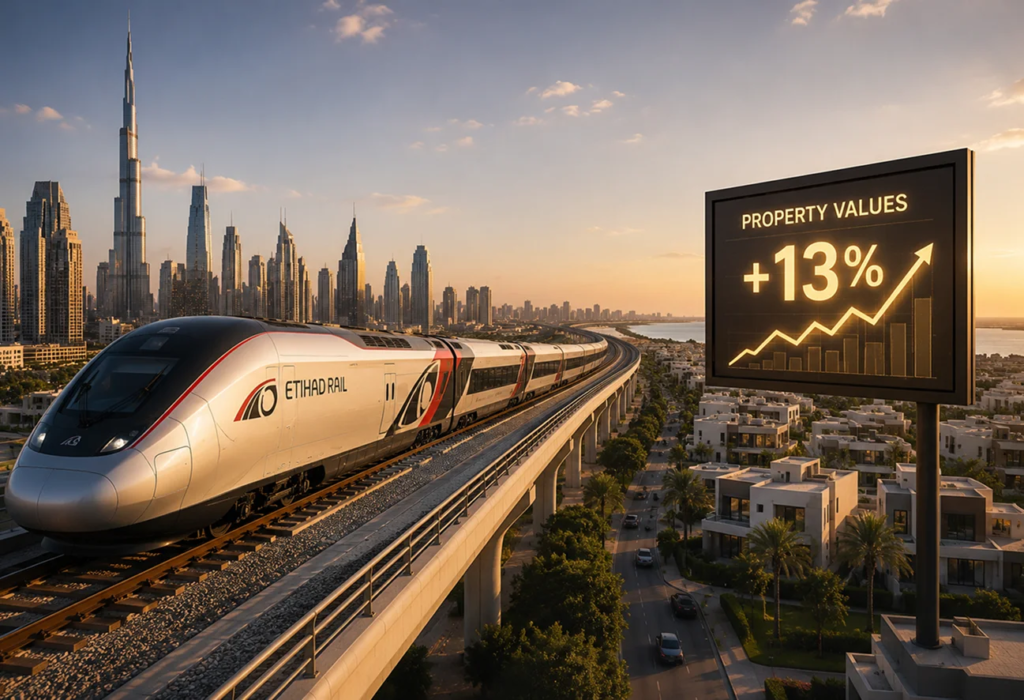
It’s easy to look at a 1,000-kilometer railway project as just another engineering flex. But in reality? It’s a complete rewiring of how people live, work, and commute across all seven emirates. And historical market data shows properties sitting along strategic transit corridors are already seeing value boosts of up to 13%.
Here’s what’s actually happening behind the numbers, why the shift matters right now, and how to spot where the real value is landing.
The end of the “Commute Trap”
Anyone who has driven the E11 between Dubai and Abu Dhabi during peak hours knows the pain. You aren’t just paying in fuel; you’re paying in wasted hours.
By tying together industrial hubs, quiet coastal suburbs, and city centers, Etihad Rail breaks the invisible barrier that kept people tethered strictly to where they work.
The Big Shift: When a commute drops from an exhausting 90-minute bumper-to-bumper drive to a smooth 30-minute train ride, distance stops being a dealbreaker.
Suddenly, living in lower-density, lower-cost communities in Ras Al Khaimah, Fujairah, or Sharjah while working in Downtown Dubai isn’t just a hypothetical idea. It’s an attractive, high-quality daily lifestyle.
What 13% appreciation actually looks like
Why 13%? It’s not an arbitrary number pulled out of thin air. Worldwide from London’s Elizabeth Line to Tokyo’s suburban expansions, transit-oriented development (TOD) follows a predictable three-wave pattern:
- The Announcement Bump: Early spec-investors buy near planned stations (high risk, modest gain).
- The Breaking-Ground Spike: Real construction begins, developers launch surrounding master plans, and prices climb 5–8%.
- The Operational Premium: The first passenger trains run, actual travel times drop, and rental yields leap by 10–13%+ as real tenants move in.
The UAE market is moving squarely into Phase 3.
[Phase 1: Announcement] ➔ [Phase 2: Construction Spike] ➔ [Phase 3: Operational Premium (+13%)]
(Speculation & Hype) (Master Plans Launch) (Actual Commuters Move In)
Where the value is actually concentrating
Not every property next to a train track is a goldmine. In fact, buying too close to heavy industrial lines without passenger infrastructure can actually hurt resale value. The sweet spot isn’t just “near the track”, it’s within the ecosystem surrounding the hubs.
1. The Suburban Commuter Belt
Locations that were once considered “too far out” for daily commuters are suddenly in play. Areas near regional passenger stations are turning into self-sustained neighborhoods with new retail, schools, and parks designed specifically for daily rail users.
2. Logistics and Commercial Micro-Hubs
It’s not just passenger trains. The freight side of Etihad Rail connects major ports (Jebel Ali, Khalifa Port, Fujairah Port). That creates massive job growth in surrounding industrial and residential pockets, bringing a steady stream of long-term rental demand from working professionals.
3. The “Secondary City” Boom
Northern emirates like Ras Al Khaimah and Ajman are experiencing a surge in developer interest. Lower land costs combined with direct, rapid access to Dubai create a massive margin for capital growth.
The Tenant Play: Higher Yields, Zero Vacancy
If you’re buying to rent out, rail connectivity is essentially vacancy insurance.
Tenants prioritize two things above all else: convenience and predictable monthly costs. A tenant living near a rail station spends significantly less on fuel, car maintenance, and toll gates. That saved cash often goes straight into paying slightly higher rent for a better-connected apartment.
- Lower Turnover: Tenants who love their commute stay longer.
- Broader Tenant Pool: You aren’t just renting to people working in one district; you’re renting to anyone working along the entire rail line.
The Investor’s Playbook for 2026
If you’re looking to capitalize on the Etihad Rail effect, keep these three rules in mind:
- Focus on the 10-Minute Radius: The biggest price premiums apply to properties within a 10-to-15-minute walk or short shuttle ride from planned passenger terminals.
- Look for “Transit-Oriented” Master Plans: Favor developments designed around pedestrian access and community spaces over isolated towers near high-speed roads.
- Think Beyond Dubai Proper: The biggest percentage gains rarely happen in already-established luxury sectors like Palm Jumeirah. The high-ROI plays are in emerging corridors linking the emirates together.
The Bottom Line
Etihad Rail isn’t just moving people; it’s redistributing wealth across the UAE real estate landscape. As connectivity grows, the traditional boundaries of high-value property are expanding fast. Those who spot this transport corridors early won’t just save time on their commute, they’ll see the returns in their portfolio.
Disclaimer:
The information provided in this blog post is for general informational purposes only and does not constitute legal, financial, or investment advice. Le Nest Properties and its website do not assume any responsibility or liability for decisions made based on this content. If you are considering investing in Dubai real estate, we strongly recommend consulting with a qualified specialist or contacting us directly for personalized guidance.