There is an old saying in real estate that you can always build more buildings, but you cannot build more ocean.
If you stand on the shoreline of Emaar Beachfront or walk the boardwalk of Dubai Creek Harbour, you quickly realize that Dubai took that old saying as a personal challenge. Through decades of unparalleled engineering, the city literally reshaped its geography to meet an insatiable global appetite for the water.
The Dubai real estate market has shifted into a highly mature, discerning “two-tier” environment. The days of blind, speculative buying across any zip code are gone. Instead, smart capital is converging on premium, scarce assets. At the absolute apex of this evolution sit waterfront properties.
Why does a city surrounded by desert remain so completely obsessed with the sea? More importantly, why does the data suggest that this demand is only gaining momentum? Let’s pull back the curtain on the emotional, economic, and practical forces driving Dubai’s waterfront boom, and outline exactly what it means for your portfolio.
The Human Factor: The “Blue Mind” Economy
Before looking at spreadsheets and rental yields, we have to look at human psychology. Marine biologist Wallace J. Nichols coined the term “Blue Mind” to describe the mildly meditative state our brains enter when we are near, in, or on water. It reduces anxiety, amplifies creativity, and provides a sense of peace.
In a fast-paced, hyper-connected world, luxury is no longer just about gold leaf and marble floors; luxury is peace of mind.
Dubai has successfully transitioned from a transient stopover city into a permanent, primary home for global citizens. As high-net-worth individuals (HNWIs) and executive families relocate here permanently, they aren’t just looking for a roof over their heads. They are looking to design a life.
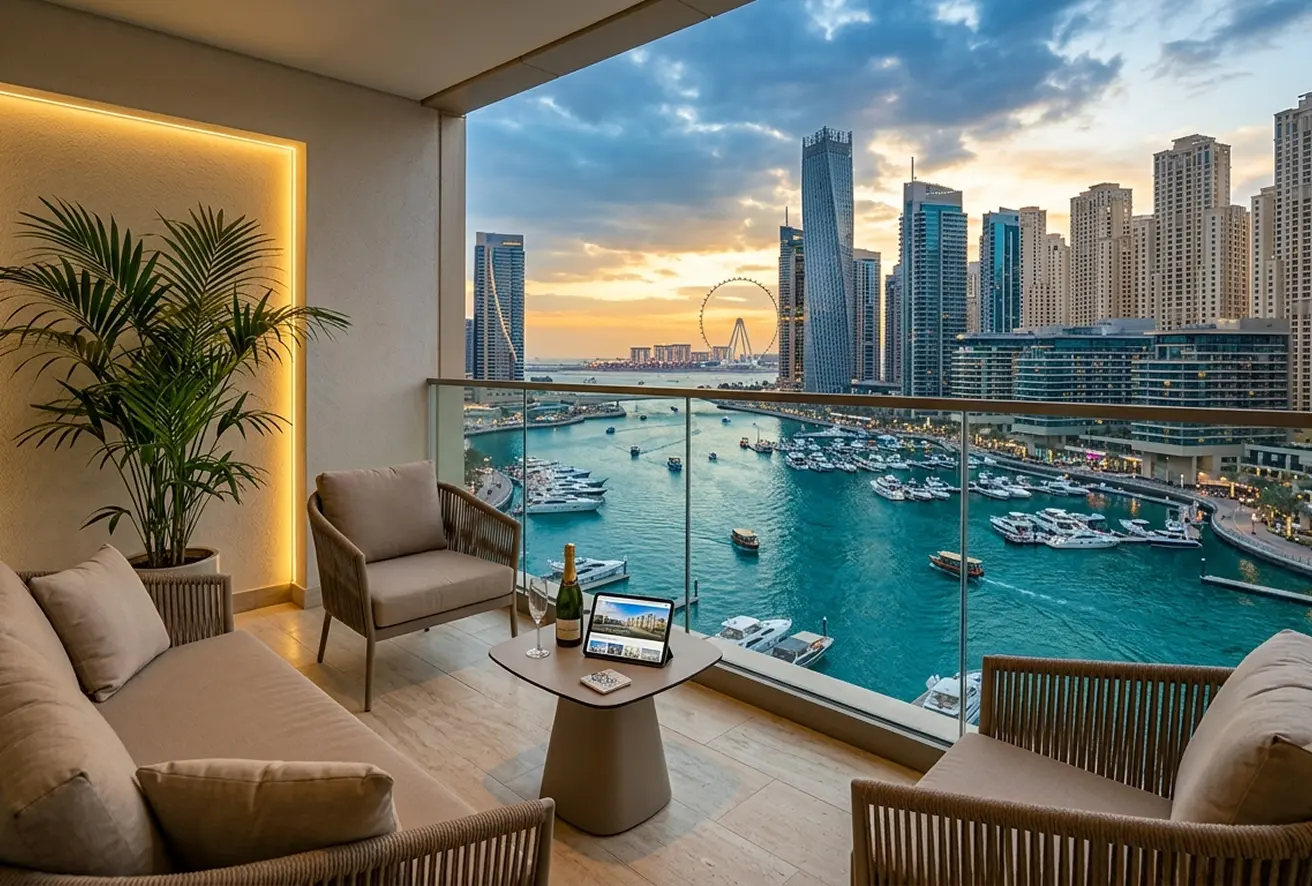
A waterfront home in Dubai represents the ultimate fusion of two world-class lifestyles: the relentless, ultra-connected drive of a global financial capital, and the relaxed, sun-drenched ease of a Mediterranean resort. Waking up to panoramic views of the Arabian Gulf or the historic Dubai Creek isn’t just an aesthetic flex, it is a tangible lifestyle upgrade that people are willing to pay a premium for.
1. The Economics of Absolute Scarcity
While Dubai has vast swathes of land available for inland expansion, its premium shoreline is strictly finite. You can build another tower in a desert master plan, but you cannot easily replicate a pristine beachfront plot.
This brings us to a fundamental rule of wealth preservation: buy what cannot be duplicated.
The current market is defined by a widening performance gap between generic, high-density inland apartments and low-supply, high-demand coastal assets. While massive handovers of generic apartment units can occasionally cause localized rental plateaus inland, waterfront communities remain structurally insulated.
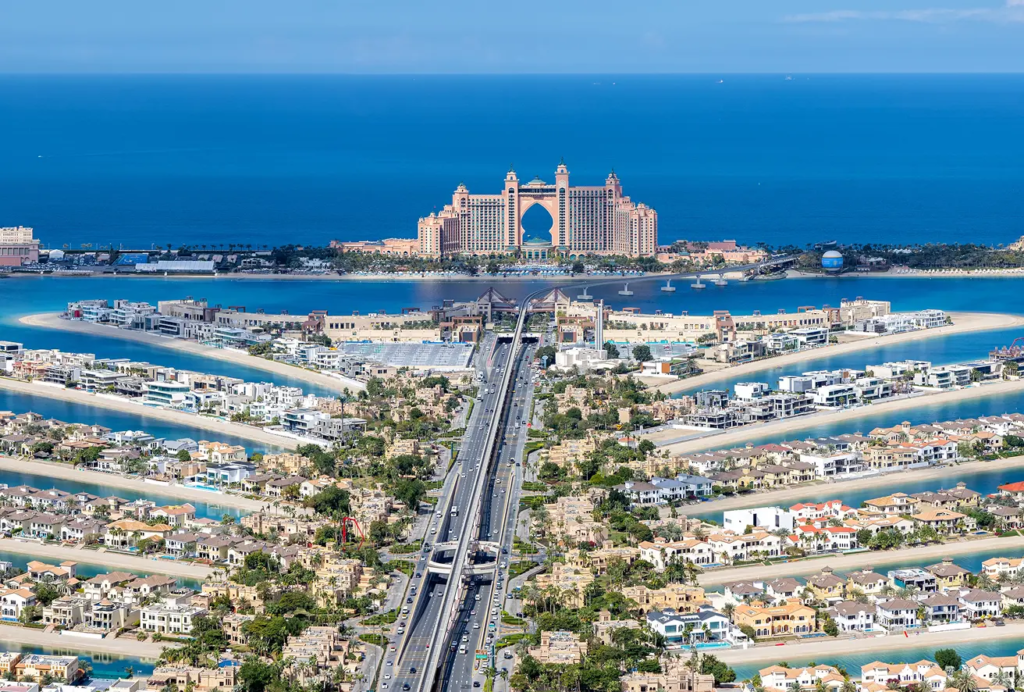
When you invest in prime maritime real estate whether it’s an ultra-exclusive villa on the Palm Jumeirah or a sleek residence along the Dubai Canal you are investing in a closed loop of supply. As global wealth continues to migrate to the UAE, a growing number of buyers are competing for a fixed pool of coastal inventory. This supply-and-demand imbalance is the engine behind sustained capital appreciation.
2. Macroeconomic Tailwinds Supporting the Market
Dubai’s real estate narrative is built on robust, institutional-grade fundamentals. The city has become a global safe haven, and several key pillars ensure that the demand for its best properties remains structural rather than cyclical:
- Sustained Population Expansion: Dubai’s resident population has comfortably crossed 4.2 million. The city is absorbing hundreds of thousands of affluent families and skilled professionals, creating continuous, organic pressure on both the luxury sales and premium rental markets.
- The Ultimate Safe-Haven Tax Regime: With 0% personal income tax, zero capital gains tax, and a highly reliable legal framework, the UAE remains a premier destination for global wealth preservation.
- Strategic Infrastructure Injection: The city isn’t resting on its laurels. Massive infrastructure projects, such as the upcoming Metro Blue Line corridor, are actively connecting emerging waterfront hubs like Dubai Creek Harbour directly into the heart of the city, instantly boosting future localized valuations.
3. The Investor’s Thesis: Hard Numbers, High Returns
If the lifestyle draws you in, it’s the financial ledger that seals the deal. For international investors looking to put their capital to work, Dubai’s waterfront assets present an incredibly compelling mathematical case.
Outperforming Global Yields
In mature real estate markets like London, New York, or Paris, prime residential properties rarely generate net rental yields above 3% to 4%. Dubai, by contrast, operates on an entirely different level. Long-term rentals in premium waterfront districts regularly achieve net returns between 6% and 8%.
Capitalizing on the Short-Term Vacation Boom
Because Dubai is a year-round tourism and business hub, the short-term rental market (via platforms like Airbnb or specialized holiday home managers) is exceptionally lucrative. A well-designed, strategically located waterfront apartment can comfortably net an investor 8% to 12% annual ROI. Tourists and business executives are consistently willing to pay a hefty nightly premium to step out of their lobby and directly onto a beach or a vibrant marina boardwalk.
The Waterfront Premium: Historical transactional data reveals that properties offering direct beach access or immediate proximity to a yacht marina command a 20% to 35% pricing premium in both rental rates and resale value compared to identical configurations located just a few blocks inland.
Capital Appreciation and Global Capital Inflows
Early-stage entry into expanding waterfront mega-projects offers immense equity growth. For instance, early buyers in master-planned communities like Dubai Creek Harbour are seeing their property values climb significantly as the district’s retail, leisure, and transport networks open up.
Leveraging the 10-Year Golden Visa
Real estate isn’t just an asset class in the UAE; it’s a pathway to long-term stability. By investing a minimum of AED 2 million into residential property, foreign investors qualify for the 10-year UAE Golden Visa. This grants residency for the investor and their family, unlocks local banking infrastructure, and secures a permanent foothold in one of the safest, most forward-thinking metropolises on earth.
4. Top Waterfront Neighborhoods: A Strategic Breakdown
To maximize your returns, you must understand that Dubai is a collection of distinct micro-markets. A beachfront villa behaves very differently from a high-rise condo.
| Neighborhood | Primary Asset Focus | Average Expected Net ROI | Core Investment Catalyst |
| Palm Jumeirah | Ultra-Prime Villas & Trophy Penthouses | 6% – 7.5% | Absolute global prestige; capped supply creates a powerful hedge against inflation. |
| Dubai Creek Harbour | Premium High-Rise Apartments & Townhouses | 7% – 8.5% | Emaar master-planned community; massive gentrification driven by the upcoming Metro Blue Line. |
| Dubai Marina & JBR | High-Density Condos & Vacation Penthouses | 6.5% – 8% | High tourist footfall and mature amenities; a dominant force for short-term rental strategies. |
| Dubai Islands | Mid-to-High-End Beachfront Residences | 8% – 10% (Projected) | A massive, rapidly developing master plan offering lower entry costs and vast runway for equity growth. |
5. Emerging Trends: The Future of the Shoreline
As the Dubai property market continues to mature, two major trends are redefining what it means to own a waterfront home:
The Phenomenon of Branded Residences
Affluent buyers are increasingly prioritizing quality and operational excellence. This has triggered an explosion in “branded residences” partnerships between elite developers and global luxury icons (such as the Ritz-Carlton, Bulgari, or Dorchester Collection). Waterfront branded residences allow owners to command massive premiums because they combine beautiful coastal views with five-star, hotel-style concierge services, private yacht slips, and elite security.
Wellness-Centric Architecture
Modern tenants are hyper-focused on health, sustainability, and longevity. Waterfront living inherently aligns with this shift, offering cleaner air and active, pedestrian-friendly environments. The newest off-plan waterfront projects are integrating cutting-edge smart-home automation, eco-friendly cooling systems, and world-class wellness facilities to ensure these buildings remain highly competitive and future-proof for the next decade.
The Intelligent Investor’s Playbook
If you are looking to deploy capital into Dubai’s coastal market, success requires a strategic, analytical approach:
- Marry Yourself to Top-Tier Developers: When buying off-plan waterfront property, developer reputation is everything. Aligning with financially disciplined, government-backed, or highly credible private master developers ensures your project is delivered to international standards and meticulously maintained post-handover.
- Calculate the Net, Not the Gross: Always review the community service charges before signing a contract. Waterfront amenities like private beaches, crystal lagoons, and infinity pools require specialized maintenance. Ensure these up keep costs are factored into your financial modeling so they don’t unexpectedly chip away at your net yields.
- Position Yourself in the Early Phases: The largest capital gains are captured by investors who buy into the earliest phases of a major waterfront master plan. By securing your unit before the parks, retail promenades, and transport links are fully realized, you effectively let the developer build your equity for you.
The Bottom Line
The surging demand for waterfront properties in Dubai isn’t a flash in the pan; it is the natural consequence of a world-class city entering its golden era of maturity. By combining strict geographic scarcity with incredible rental yields, a highly favorable tax framework, and an unmatched global lifestyle, Dubai’s coastlines remain one of the most reliable and lucrative vehicles for global wealth preservation.
In real estate, you don’t just buy a structure, you buy the land beneath it and the sky around it. In Dubai, when you buy the water, you are buying a finite slice of a prosperous future.
Disclaimer:
The information provided in this blog post is for general informational purposes only and does not constitute legal, financial, or investment advice. Le Nest Properties and its website do not assume any responsibility or liability for decisions made based on this content. If you are considering investing in Dubai real estate, we strongly recommend consulting with a qualified specialist or contacting us directly for personalized guidance.